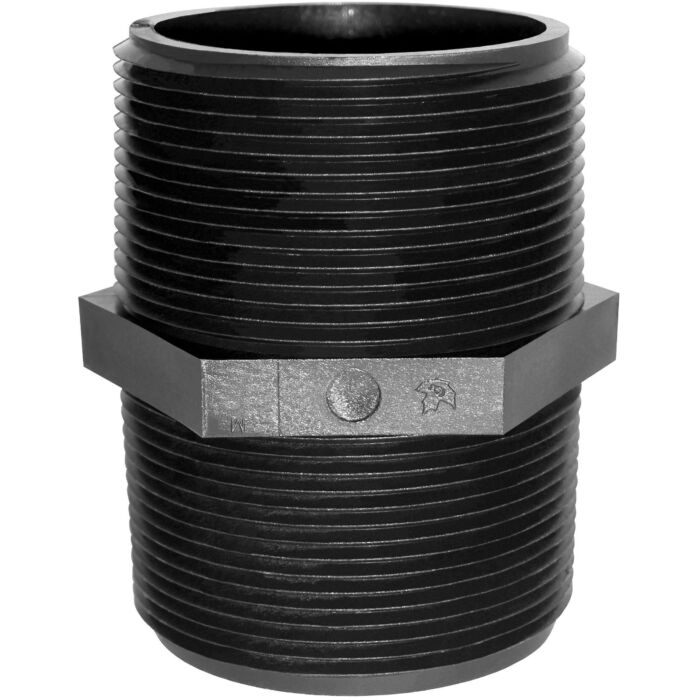
Polypropylene is a durable polymer with excellent resistance to chemicals and leeching, making it particularly well suited for high-purity applications. Our polypropylene fittings are made from either calcium carbonate or glass fiber filled resin depending on their size and characteristics. These fillers help decrease resin cost, improve manufacturing characteristics, and enhance strength and toughness. Polypropylene fittings are generally acceptable for use at working pressures up to 150 PSI at room temperature. As with all thermoplastics, an increase in working temperature is accompanied by a decrease in operating pressure. Polypropylene can approach working temperatures of 140°F at lower pressures.
Polypropylene is resistant to a broad range of chemicals including most agricultural chemicals, acid based fertilizers, ammonium compounds, calcium carbonate, ethanol, hydrochloric acid, magnesium sulfate, oxalic acid, proprionic acid, phosphoric acid and sodium compounds.
Polypropylene fittings should not be used with aromatic hydrocarbons, carbon tetrachloride, gasoline, hexane, kerosene, nitric acid, sodium hypochlorite, toluene trichloroethylene and xylene.